Möbius
A Möbius-inspired keychain that reflects the continuous rhythm of making, breaking, iterating, and beginning again.
RenderWeekly S9 · 2026
Industrial Design · Form Exploration
AI-Assisted CAD · 3D Rendering
Overview
Möbius was created for the RenderWeekly S9 Keychain Warm-Up Session. Its continuous surface transforms the Möbius strip into a compact object inspired by the repetitive nature of the creative process.
The project also became an opportunity to experiment with a new workflow, using a local AI agent for early geometry exploration before refining the form through CAD and visualization.
Question
How can the continuous geometry of a Möbius strip become a physical metaphor for the creative process?
Observation
Design rarely follows a straight line. Ideas are made, broken, revised, and repeated. Each return creates something slightly different from what came before.
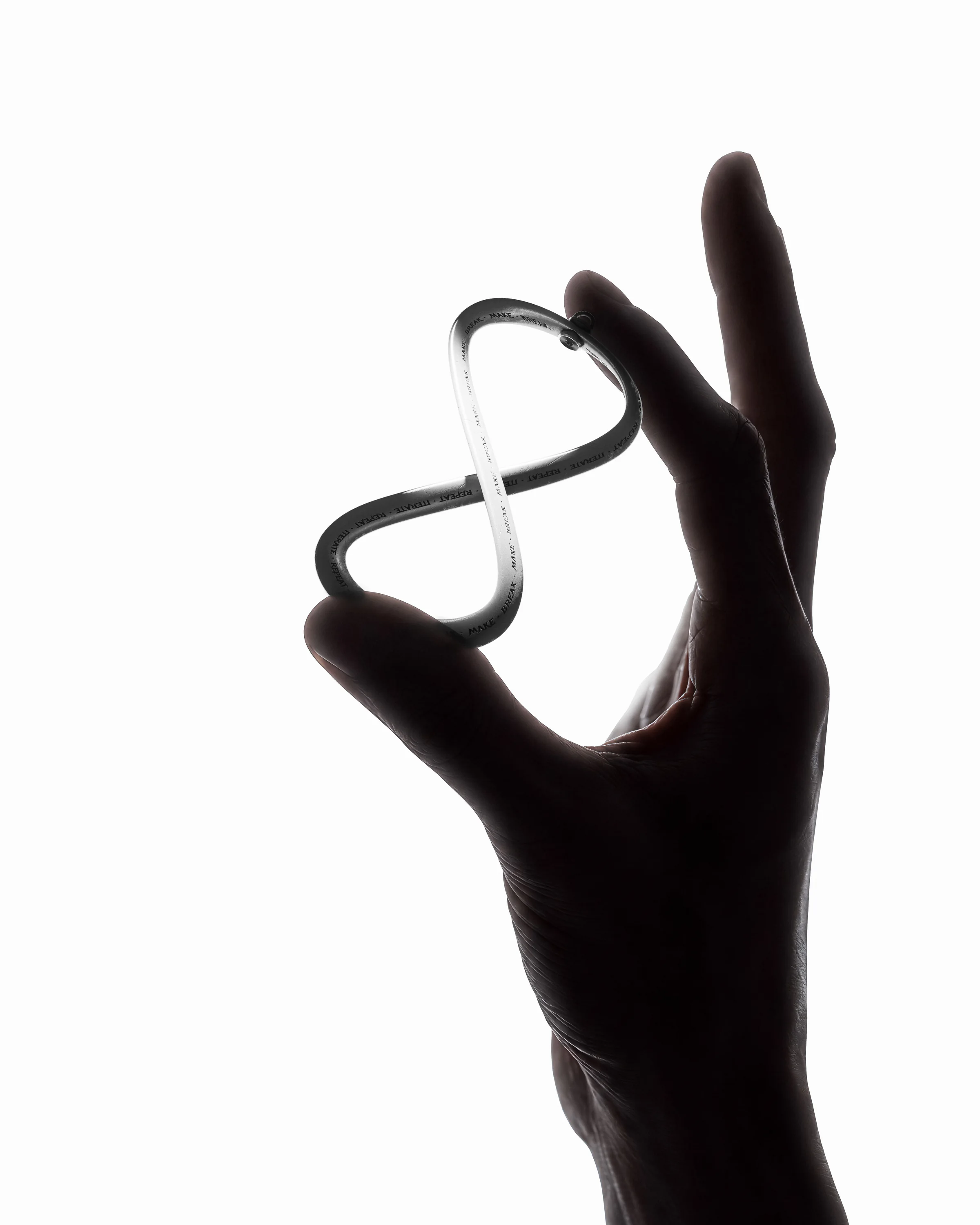
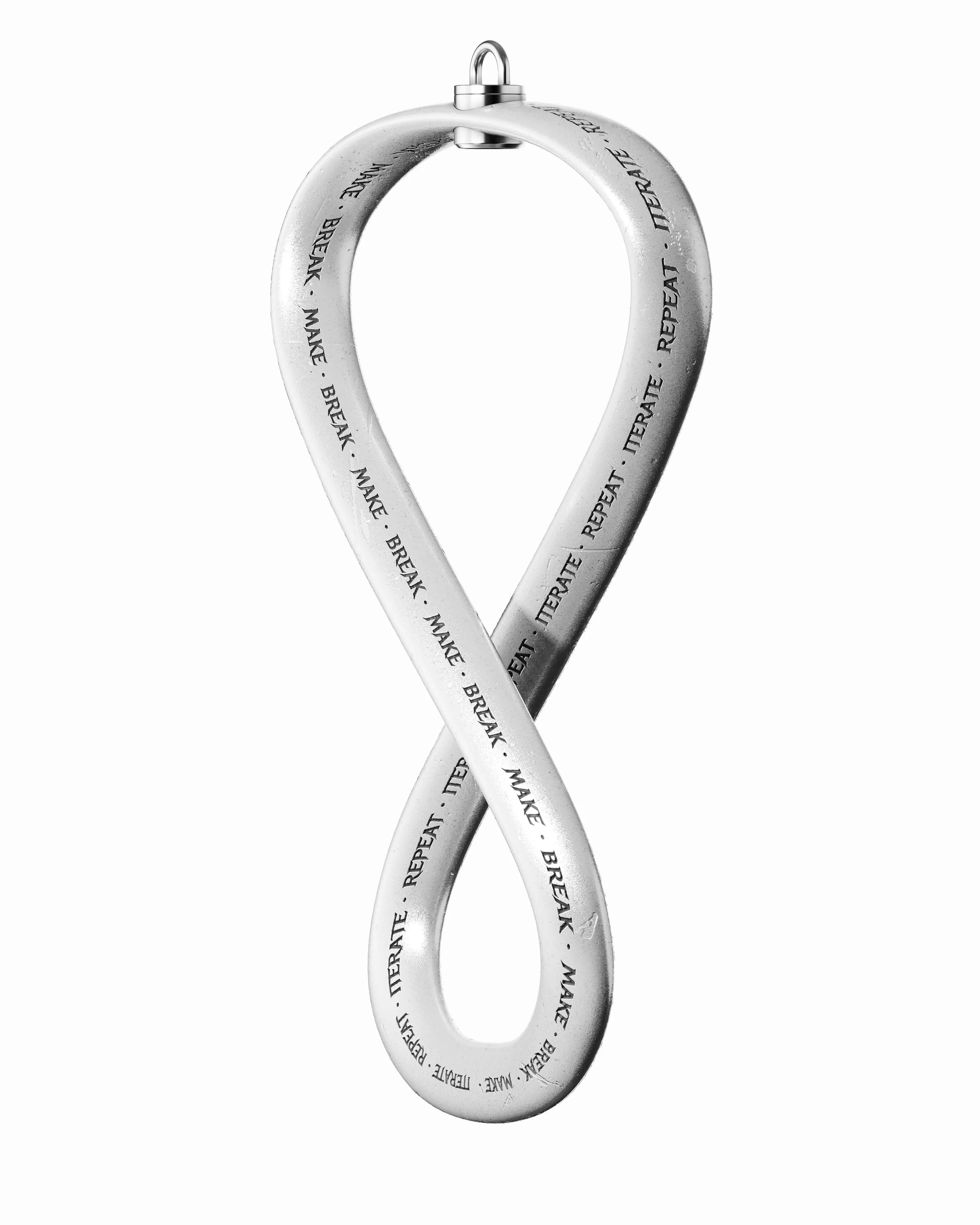
The Möbius strip reflects this cycle through a single surface that continues through a 180-degree twist, without a clear beginning or end.
Exploration
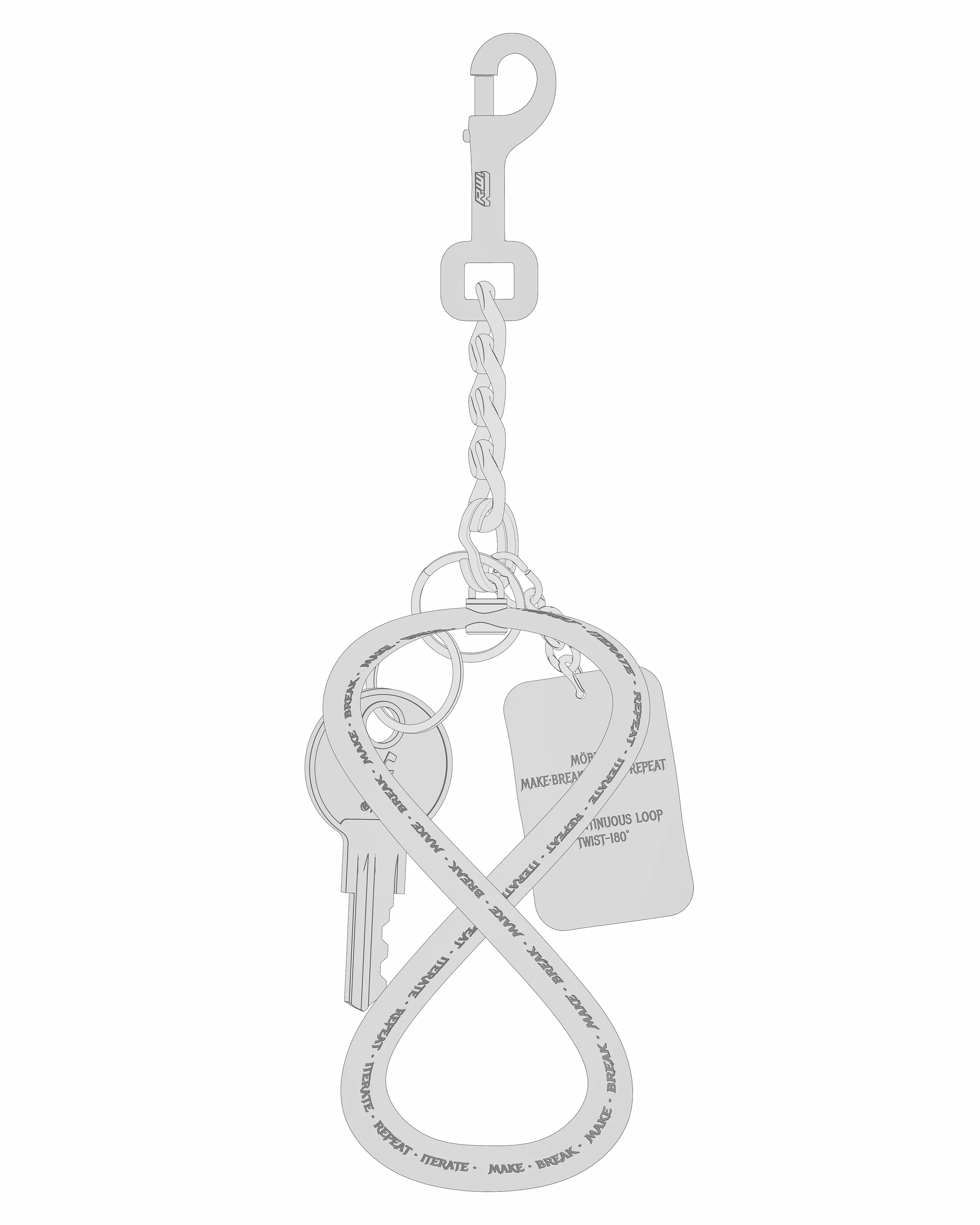
The Möbius geometry was developed into a thick, narrow loop that could work at the scale of a keychain while preserving its continuous character.
A local AI agent was used during early 3D exploration, translating verbal directions into Rhino geometry. The generated forms were reviewed, redirected, and refined through conventional CAD based on proportion, construction, and visual intent.
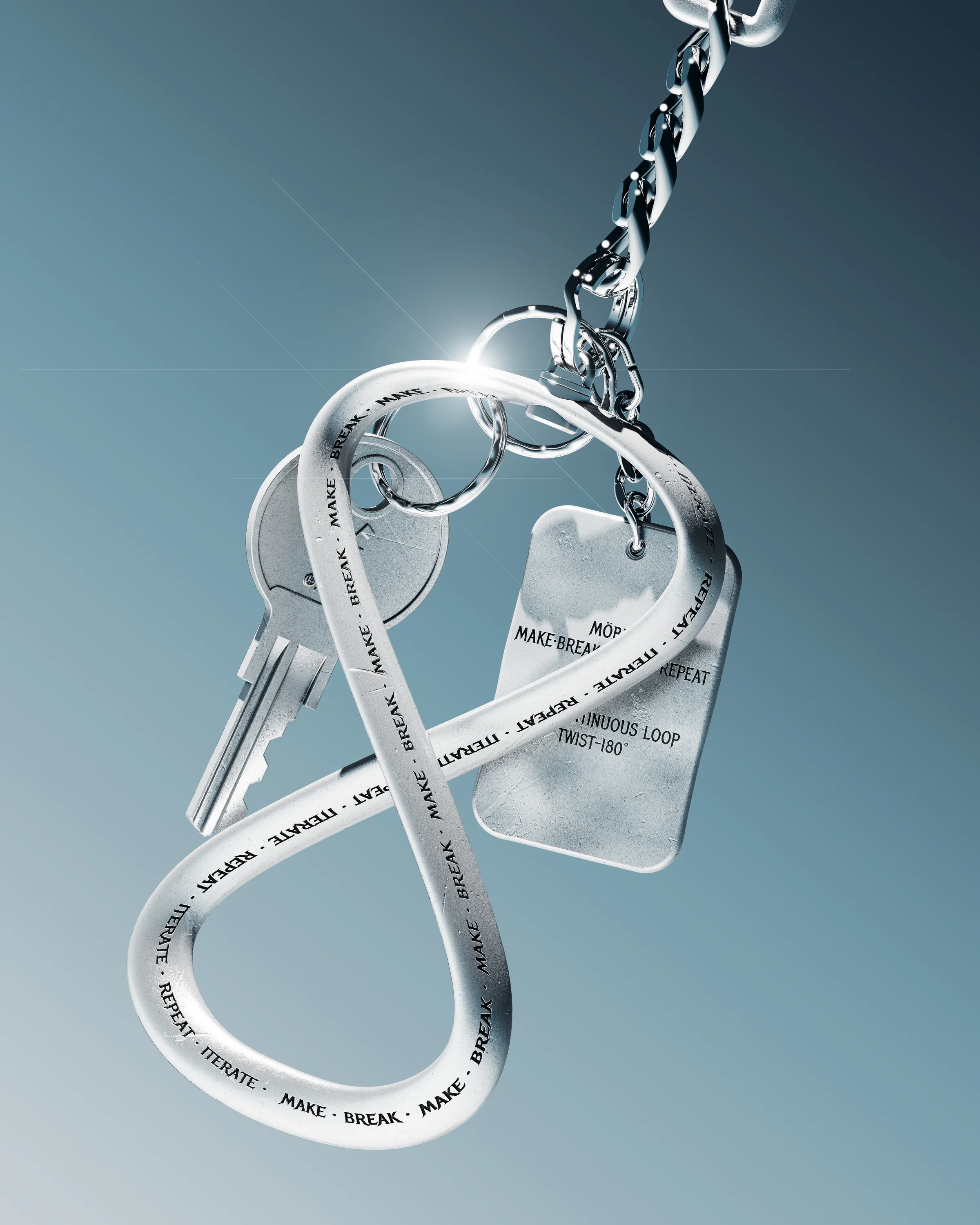
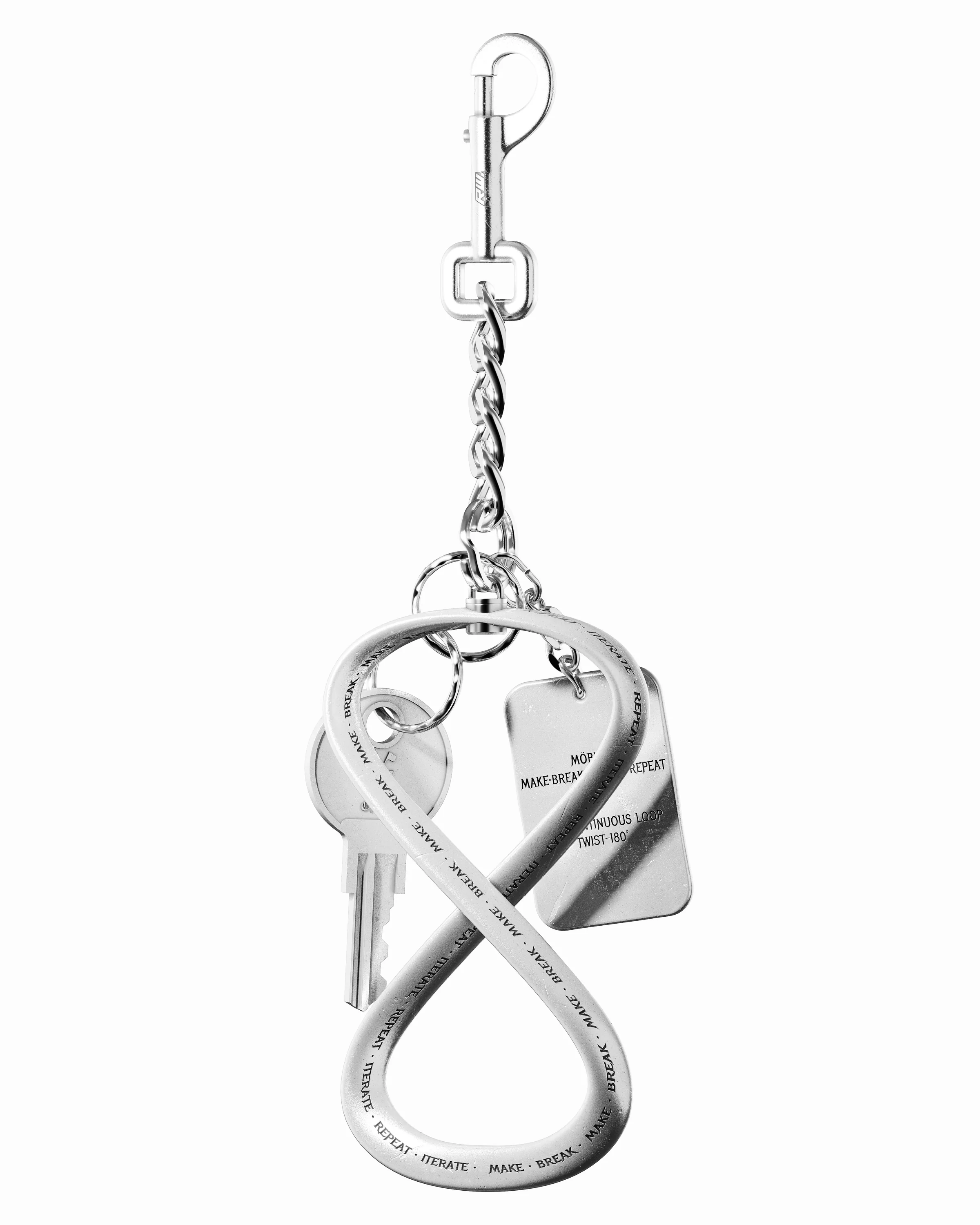
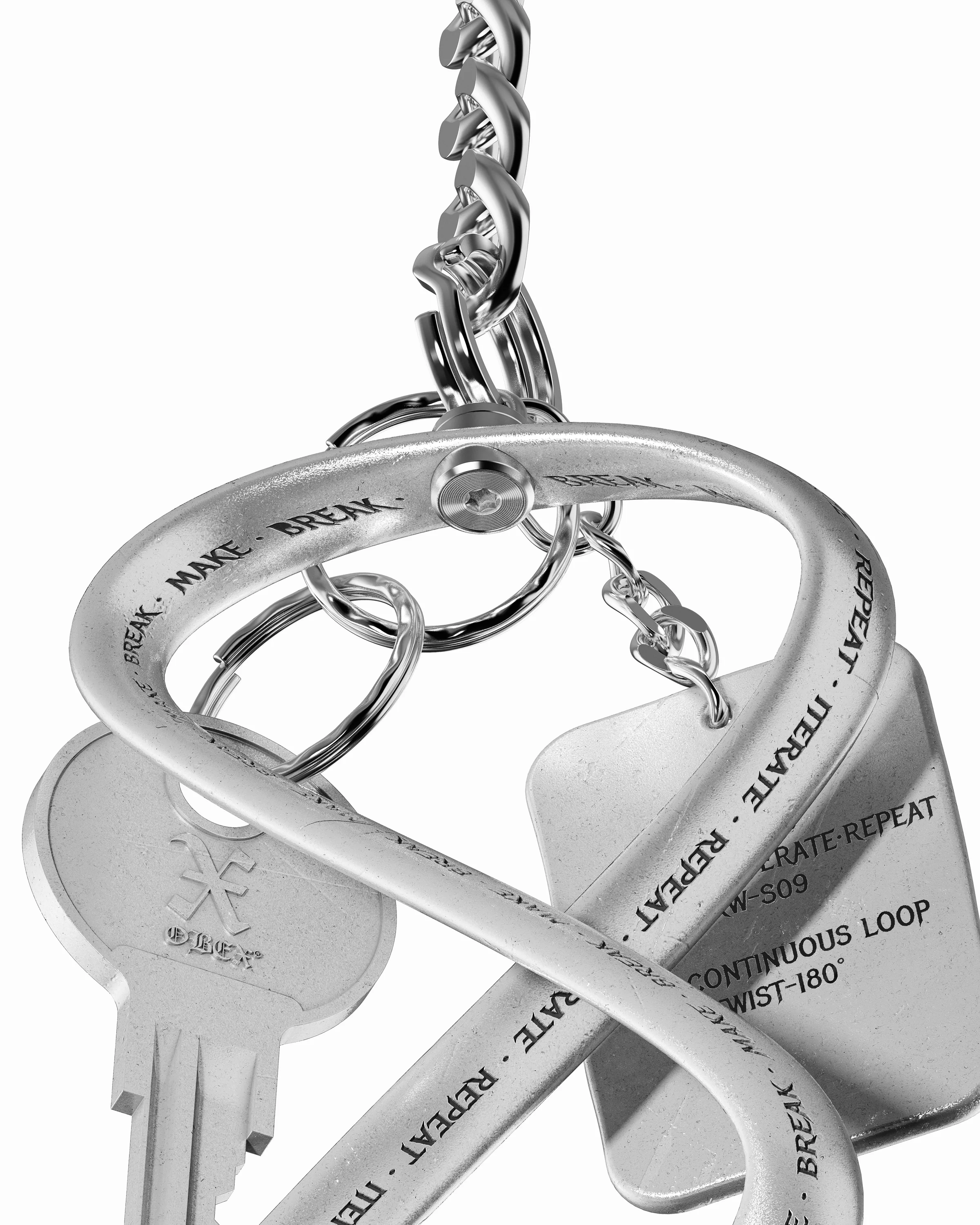
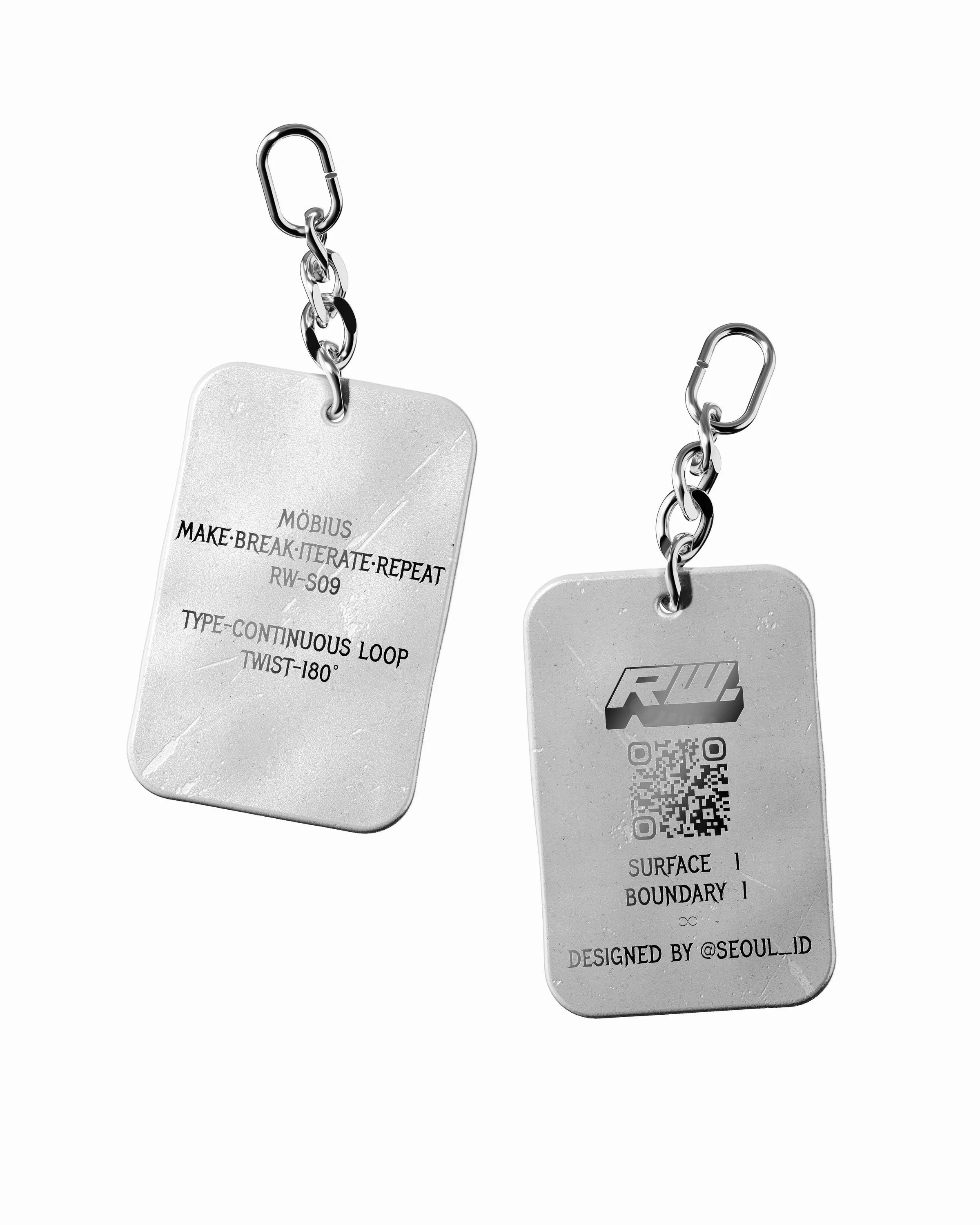
Engraved typography follows the continuous surface, while chain links, keys, and metal tags place the abstract geometry within the familiar context of an everyday carried object.
Resolution
The final concept combines the Möbius loop, attachment hardware, and the engraved phrase MAKE · BREAK · ITERATE · REPEAT into one visual system.
A worn silver finish gives the precise digital geometry the character of an object that has already been carried, touched, and used over time.
Reflection
Möbius was also my first experiment integrating a local AI agent directly into the 3D modeling process.
Rather than treating generated geometry as a finished result, the process used AI for rapid spatial exploration while keeping decisions about proportion, construction, refinement, and meaning within the designer's control.